

Knee pain is one of the most common complaints we see at Somerset Osteopathic Clinic. But the root cause isn’t always where you feel it.
Whether it’s a dull ache, sharp twinge, or persistent stiffness, knee pain can be incredibly limiting—affecting everything from walking to sleeping, driving to exercise. At Somerset Osteopathic Clinic, we take a different approach to understanding and treating this kind of pain.
We believe knee pain is rarely just about the knee. That’s why Ed’s treatment focuses not only on the physical structures involved but also on uncovering the hidden tension and emotional holding patterns that may be contributing to your discomfort. It’s a whole body, whole person approach and for many, it’s the missing piece of the puzzle.
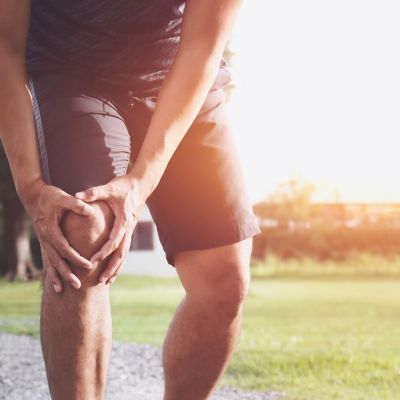
Understanding the Knee: More Than Just a Joint
The knee is the largest joint in the body, and one of the most complex. It connects the femur (thigh bone) to the tibia (shin bone) and includes a network of ligaments, tendons, muscles, cartilage, and the patella (kneecap) to keep it functioning smoothly.
Because of its central role in supporting weight, movement, and stability, even a small imbalance elsewhere in the body – like the hips, lower back, feet or ankles – can create a knock-on effect that leads to pain or discomfort in the knees.
Common Causes of Knee Pain
Every body and person is unique so the cause of knee pain needs to be carefully assessed for each individual. That being said, there are some common themes we see in clinic that may be causing or contributing to the source of pain. These include:
Muscle imbalances: Tightness or weakness in the quadriceps, hamstrings, calves, glutes or hip flexors.
Joint dysfunction: Misalignment or restriction in the knee, hip, ankle or pelvis affecting movement patterns.
Ligament or tendon strain: Often the result of overuse or poor biomechanics.
Cartilage damage: Including conditions like osteoarthritis or meniscal tears.
Post-surgical recovery: Scar tissue and restricted movement following knee surgery or replacement.
Referral pain: From elsewhere in the body, such as the lower back or sacroiliac joint.
At first glance, these causes appear purely physical. But at Somerset Osteopathic Clinic, we look beyond the surface.
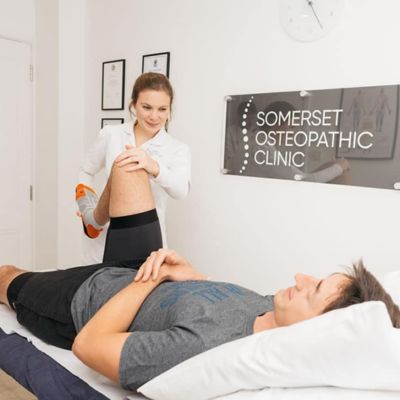
The Link Between Knee Pain and Emotional Stress
What if your knee pain isn’t just structural?
Ed’s approach considers what might be held in the body – emotionally, physically and even subconsciously. In his clinical experience, emotional trauma is a significant factor in many chronic or unresolved cases of pain, including in the knees.
These emotional stressors can be:
Big, recognisable traumas – bereavement, accidents, relationship breakdowns, medical events.
Or smaller daily stress patterns – long-term pressure at work, caregiving responsibilities, the stress of “keeping going” when you’re exhausted.
The body doesn’t separate physical and emotional experiences. It holds both. And when the nervous system remains in a prolonged state of stress, the body tightens, tenses, and stores that energy often deep within the fascia and surrounding soft tissues. Over time, this can create restriction, pain, and inflammation that presents as musculoskeletal discomfort.
For many of Ed’s patients, releasing this built-up tension, not just in the knee but throughout the body, is a turning point in their recovery.
Why Osteopathy?
Osteopathy works with the body’s structure to restore balance and support its natural ability to heal. Rather than simply “treating the knee,” we work to understand:
Why the pain is happening?
Where the strain originates?
What else is contributing to it – structurally and emotionally?
Ed uses precise, often subtle techniques that support the nervous system, encourage the release of tension held in the fascia, and restore movement to areas that have become stuck or restricted.
This is not aggressive manipulation. There are no “cracks” or forced movements. Treatment is calm, respectful, and deeply supportive, designed to work with your body, not against it.
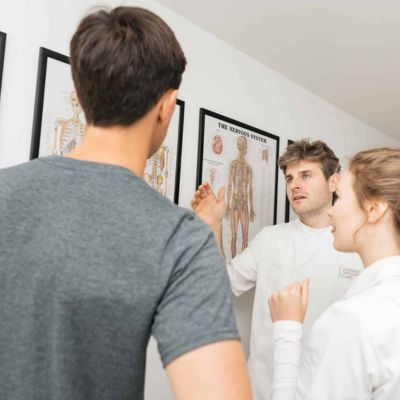
Restoring Your Body’s Ability to Heal
One of the most powerful principles behind osteopathy is this: your body is always trying to heal.
But when it’s stuck in a state of tension – whether from past injury, long term compensation or emotional overwhelm – it can’t access the resources it needs to restore balance.
Osteopathy helps your body remember what it’s capable of. By improving circulation, easing physical restrictions, and supporting the nervous system, it creates the conditions needed for healing to take place – naturally and effectively.
Why Patients Choose Ed at Somerset Osteopathic Clinic
Ed is a specialist in chronic and complex pain. With a First Class Master’s degree from the European School of Osteopathy and over a decade of experience, his approach has helped hundreds of patients – especially those who have tried other therapies without success.
Ed doesn’t follow a formula. Every treatment plan is unique. He listens deeply, assesses carefully and focuses on identifying the true source of discomfort – often uncovering issues that others have missed.
And because trust is central to effective care, all treatment with Ed is underpinned by his Treatment Guarantee, a promise that you’ll receive the very best care, tailored to your needs, with no unnecessary sessions or bundled packages.
When to Seek Help
If your knee pain is persistent, unexplained, or simply isn’t improving, you don’t have to keep pushing through. Whether you’ve tried other routes or are exploring osteopathy for the first time, you’re welcome here.
We offer free 10 minute telephone consultations so you can ask questions and decide if our approach feels right for you – no pressure, no obligation.
You don’t need to live in discomfort.
And you don’t need to go it alone.